


Final Update
6-5-2024
I've definitely done a poor job at updating this topic. Not because I didn't figure everything out, but only because I've been a bit busy with other projects.
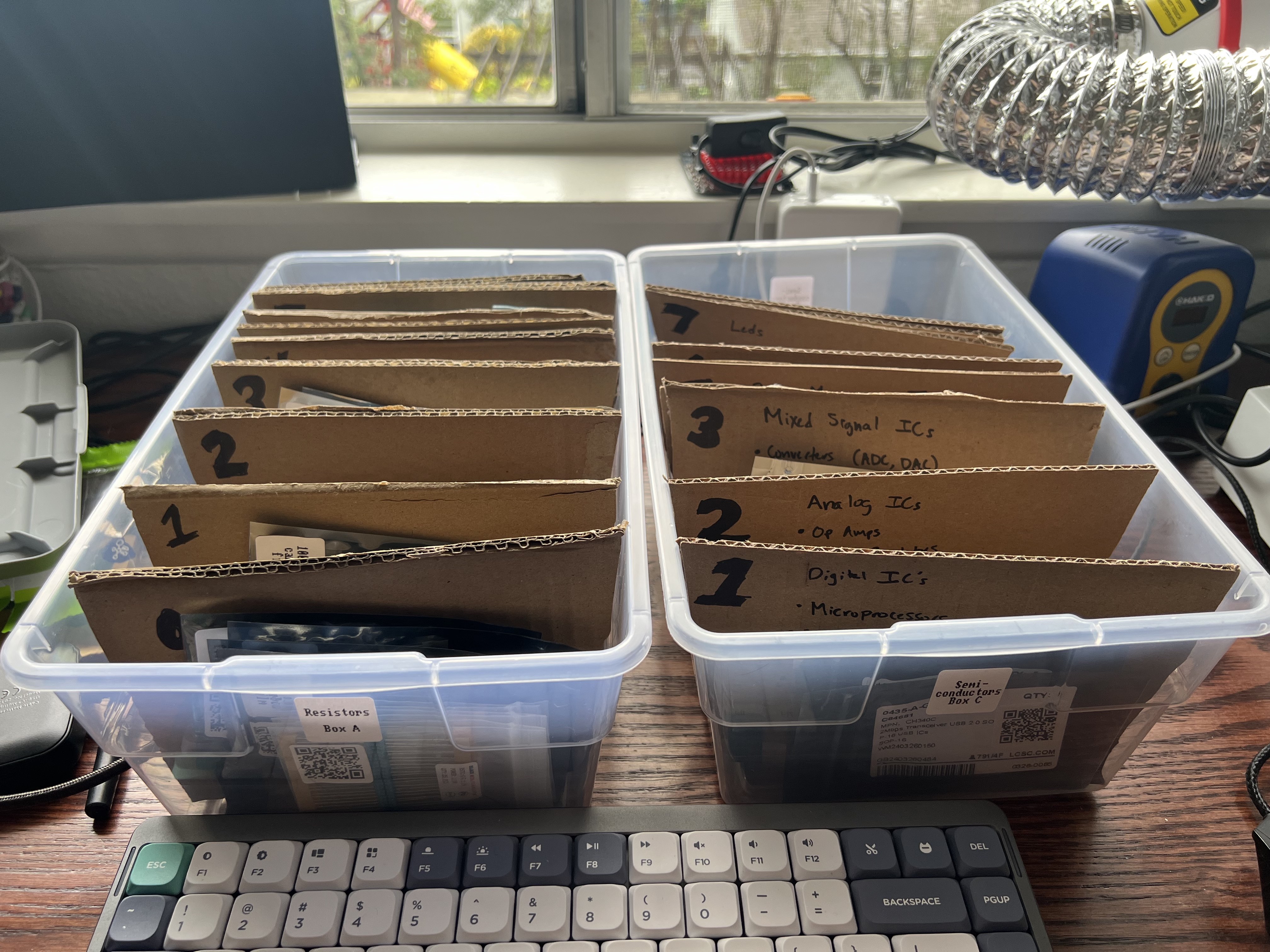
I ended up needing around 75 (I think) dividers for the bins. It took an extremely long time to print each of the dividers shown in the last post, so there was no way I was patient enough for that option to scale to what I wanted.
Luckily, handy cardboard was available and willing to be sacrificed. A few hours of cutting (using my 3d printed divider as a stencil) and I had enough dividers for all sections I chose:
- Resistors (with slots numbered for 10^x resistor values)
- Capacitors
- SemiConductors (Digital, Analog, Mixed-Signal, Power Management, LED, Diodes, Transistors/MOSFETs)
- Connectors (Power, Data, Video)
- Switches/Relays/Sensors
- Power & Motors
- Wires
- PCBs
- Development Boards
Inventree
Positives
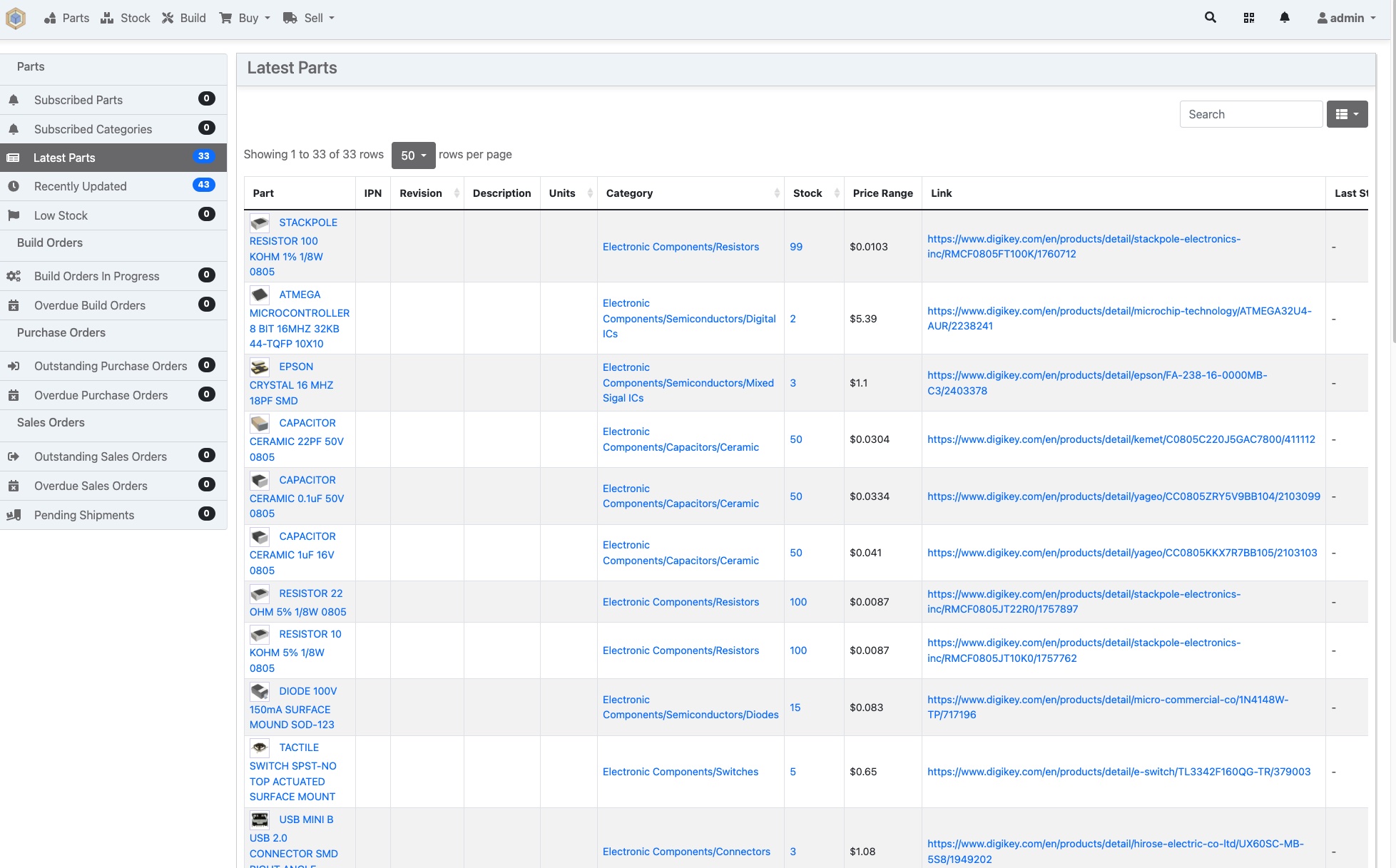
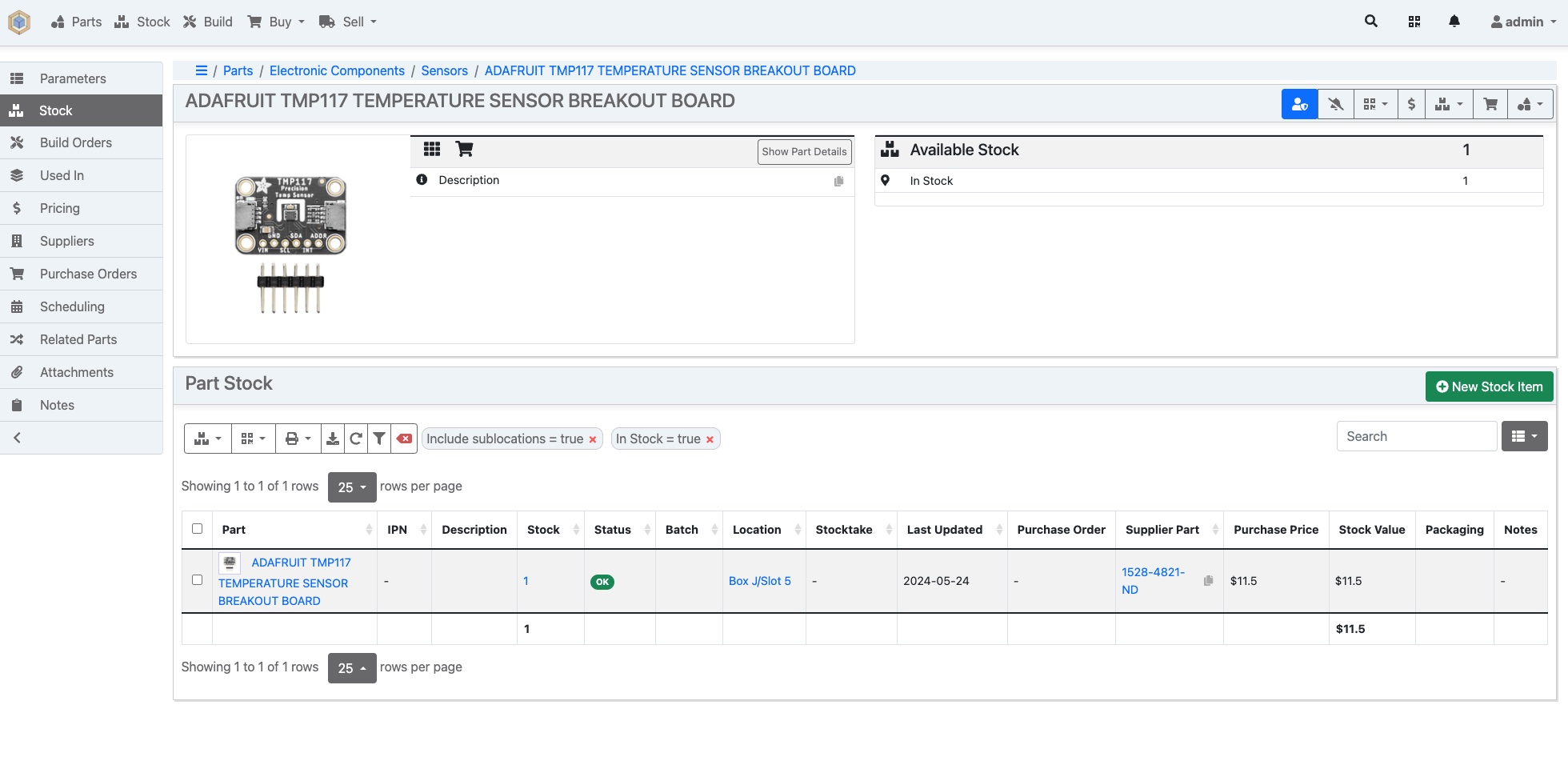
The data model used by Inventree seems to be exactly what I need in order to properly manage the inventory. I've got a system where I create part categories, create the parts within the categories, create stock items which track the number of inventory, and even upload datasheets and link to the original product page in case I need to order more.
The search seems to be fairly robust, but it's not fuzzy at all, so make sure you're staying consistent with all of your terms (10k ohm vs 10 kohm).
The ability to add pictures is really nice too. Not having to search the description or name for SMD and just looking at the picture of the component makes distinguishing components extremely easy.
Finally, the built-in barcode system makes it easy to quickly print out a part barcode that you can stick to your components. I'm constantly using this to restock the components. I'll scan the bags and find the exact bins/slots that the components should go back in. It's very fast, but be warned, you do have to do some Google chrome trickery to use the camera if you're running Inventree on an external server.
Downsides
I will say, the only issue is that I have Inventree running on a server in my house which isn't constantly on. Thus, for very small part adjustments, I have to turn on the server, wait a few minutes for it to get online, and then I can do my business.
If anything, the data model might be a bit hard to understand also. And, for smaller inventory systems like mine, it just might not make sense to use all the features they have, so the UI might feel a bit heavy with several features that you're never going to use.
Pictures

Cardboard is King
4-14-2024
On the topic of storage medium, previously I had been printing the storage bin dividers, but a couple problems that came out of that:
-
Each divider took roughly 45 minutes to print
-
The dividers only had a thin web for the structure, meaning smaller objects could possible pass through the dividers
-
Given the print orientation, the dividers would've required a completely separate foot design in order to have the divider supported from the front AND the back
Because of this, I decided to try just using the printed divider as a stencil and cut the shapes out of cardboard. Then, I could just print feet which slid onto the bottom of the cardboard panel. This also gave me the advantage of being able to write more than just a single number on the panels.
In order to determine how many bins and what should go into each, I just used ChatGPT to tell me what were the common categories of XYZ, then I was able to narrow down the options to components that I anticipate using. The best part is that I can always change this, too.
Inventree
On the Inventree side, I ended up setting up my HPE microserver (roast me, I know) with ubuntu server and inventree installed. I'm extremely impressed with the software and how intuitive it is to infer the data model and start creating an inventory.
I was able to create categories for each part, but also separately create storage locations which correspond to the bins I have and each slot within each bin. When I am cataloguing a new part, I:
-
Select the correct category
-
Name the part
-
Set the location for the part
-
Put in the supplier and the supplier's part number
-
Populate a link to the supplier's site
-
Upload a picture of the part
-
Input the number of stock for the item
-
Attach a link to the datasheet
-
Print out a QR code and stick it on the part's bag
Note: originally I had been using Inventree on a laptop, which let me use the laptop integrated camera to read the QR codes. I'm not sure why it's not letting me do that now when using my laptop as a client to the server which is running Inventree since the client just converts the QR code into a URL/part number. I'll look into this, but in the meantime, I was able to download a chrome extension which allowed me to read the QR code, copy the data in the QR code (i.e. part number), and paste that into the inventree search. Not ideal at all.
I have a pretty big backlog of inventory, but I'm making good slow progress. I'm trying to hold off on starting any new projects until I can get this done since pulling parts without the system fully in place will just mess everything up.
Let's Make this More Complicated
3-20-2024
Storage Plan Update
Now that I know I can get small 6L plastic bins for $2 at Home Depot, I'm going to double down and use those for projects and part storage. The thought is that I can print the dividers on my Prusa MK3S+, but any bigger size and I wouldn't have the build plate capacity.
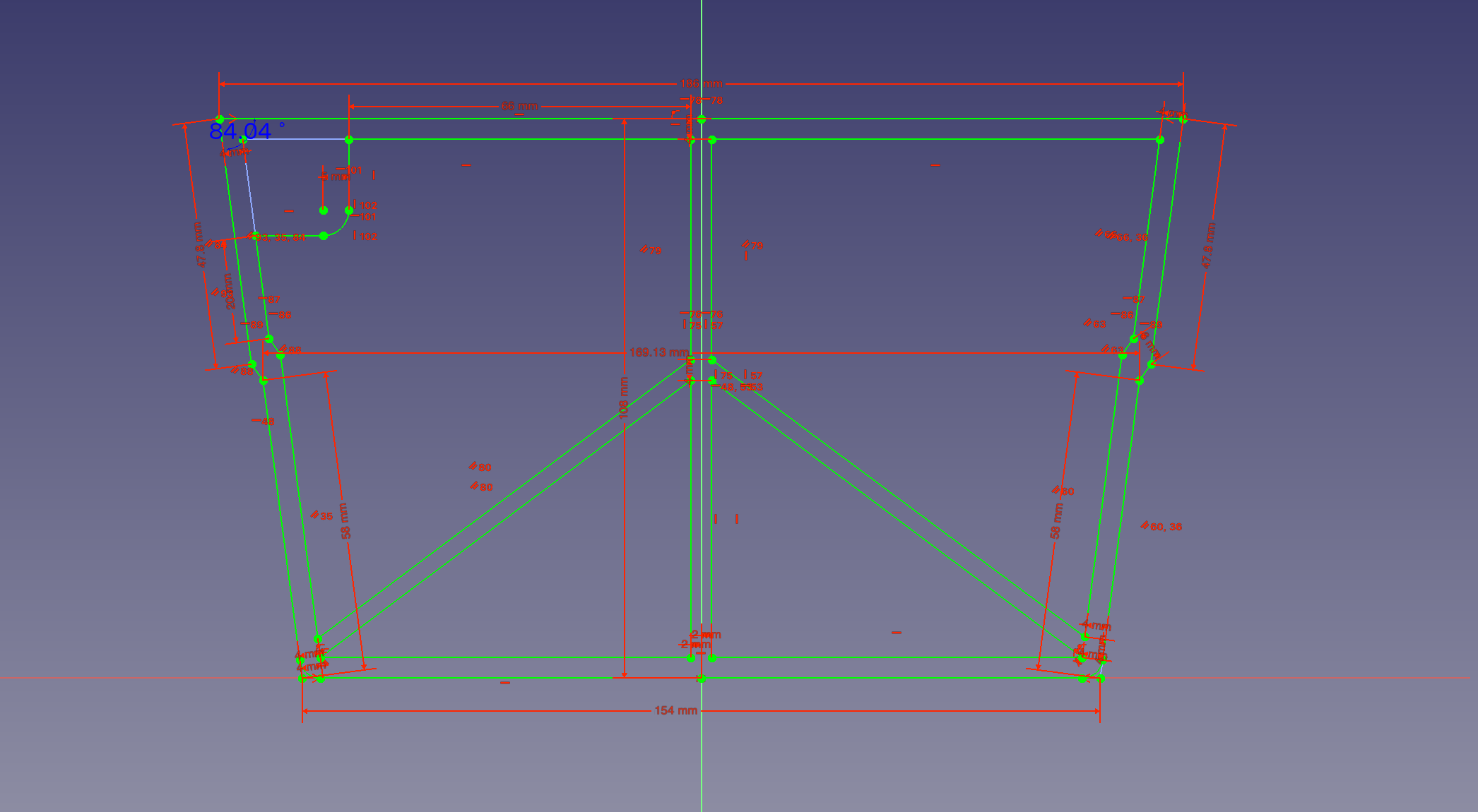
I went through a few iterations of dividers and ended on this one. Note that I haven't actually stored anything in the tubs yet, so it's not set in stone yet. They had an issue of not standing up straight (should only be an issue when I don't have enough parts in the buckets), but it was enough to warrant printing of another small part to clamp onto the bottom. This design is preferred since I hate printing with supports.
Inventree
The plan was to explore Inventree, an open-source inventory management system. I installed it on an EC2 instance and was able to get away with a t2.small configuration without it freezing, but, the TLS configuration didn't seem very straightforward, so I'm just going to install it on an ubuntu laptop I have laying around and just manage the inventory on that. It didn't really make sense to boot up the small server I have in my house or keep the EC2 instance up and running since we're looking at roughly $10-15 per month in electricity (if going with the home server) or t2.small hours. The good thing is that it looks like the software will work out and the installation truly a single click if you don't have to customize anything.
Finally Cleaning Up
3-17-2024
In an attempt to reduce the de-clutter my desk (and projects in general), I'm finally starting an inventory project that hopefully will allow me to catalog the various components I have to avoid the hours of searching I always find myself doing. Or even worse, buying duplicate parts when they're sitting in some unknown location in my office.
I'll show some pictures of the current state and then explain how I'm going to approach this.
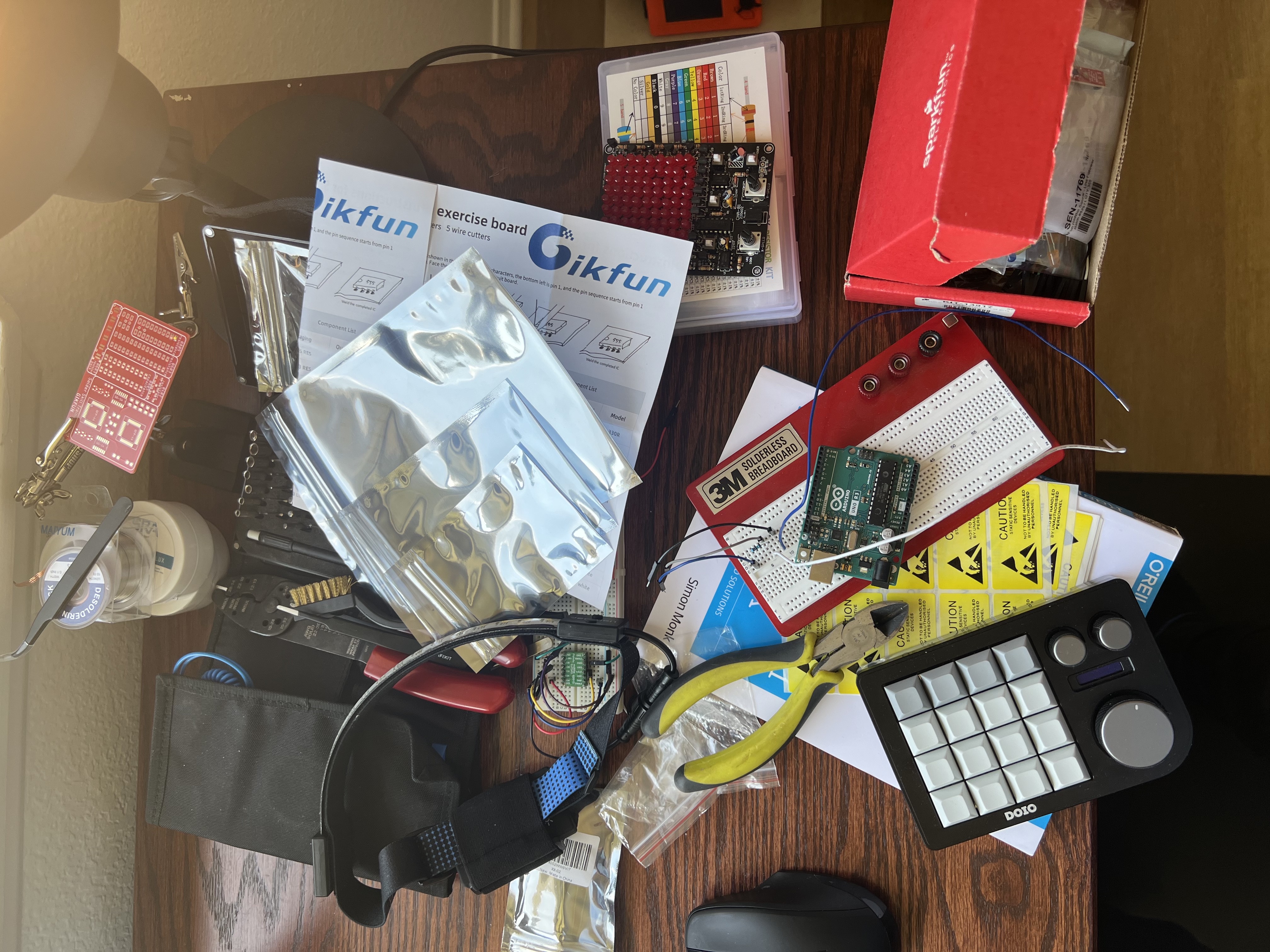
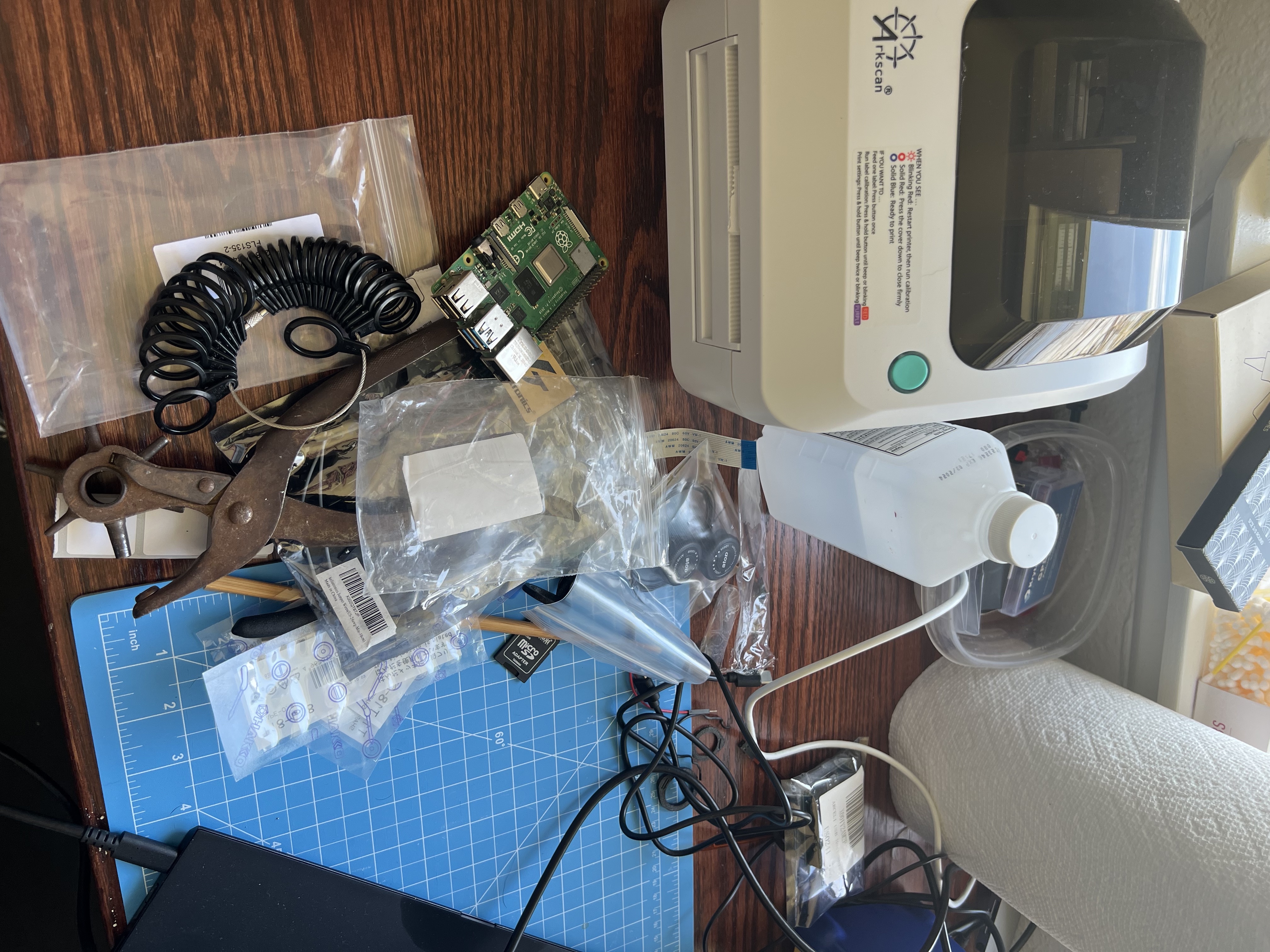
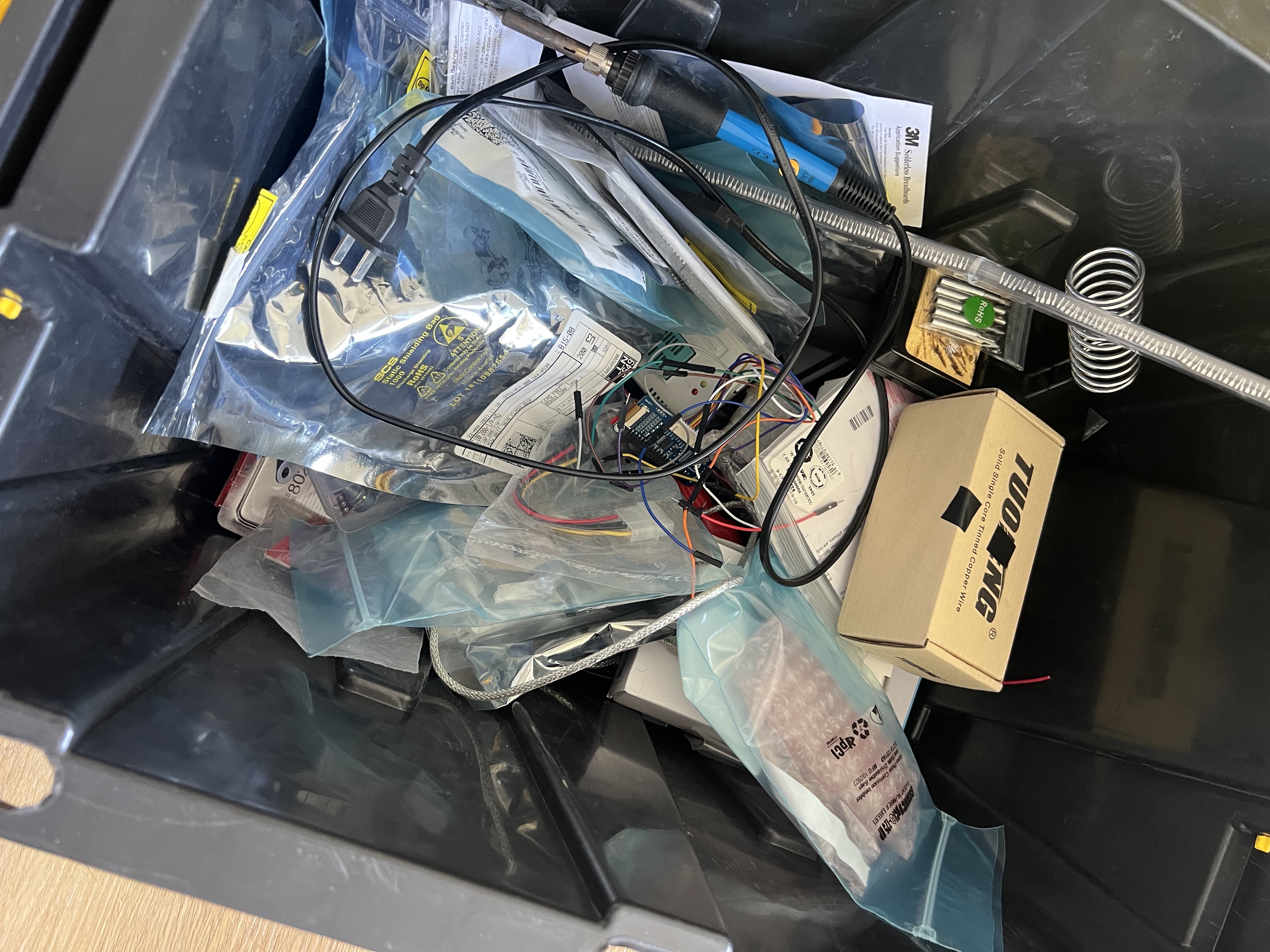
You can see that I have bins where some chips aren't even in ESD bags. Hopefully we can fix all this.
Requirements
- components are keyword-searchable in some inventory system
- component:storage location is stored in the inventory system
- system is easily expandable (i.e. decouple the storage from the system)
- component datasheets directly on inventory system component pages
- system integrates with barcodes for mobile
- barcode is on ESD bag (or other storage container)
- barcode links to inventory system in order to get datasheet/storage location/other info
I'd really like to use some open source inventory solution. From what I've found, the leading solution seems to be Inventree so I'm going to dive into the demo and see what it's going to take to deploy the product.
For the actual storage medium, I ended up going with both the 6L and 16L variations of these tubs I picked up at Home Depot. The idea is that I'll 3d print some dividers that I can label in each tub increasing storage location granularity.
I'll design and print out some dividers to show in the next update.